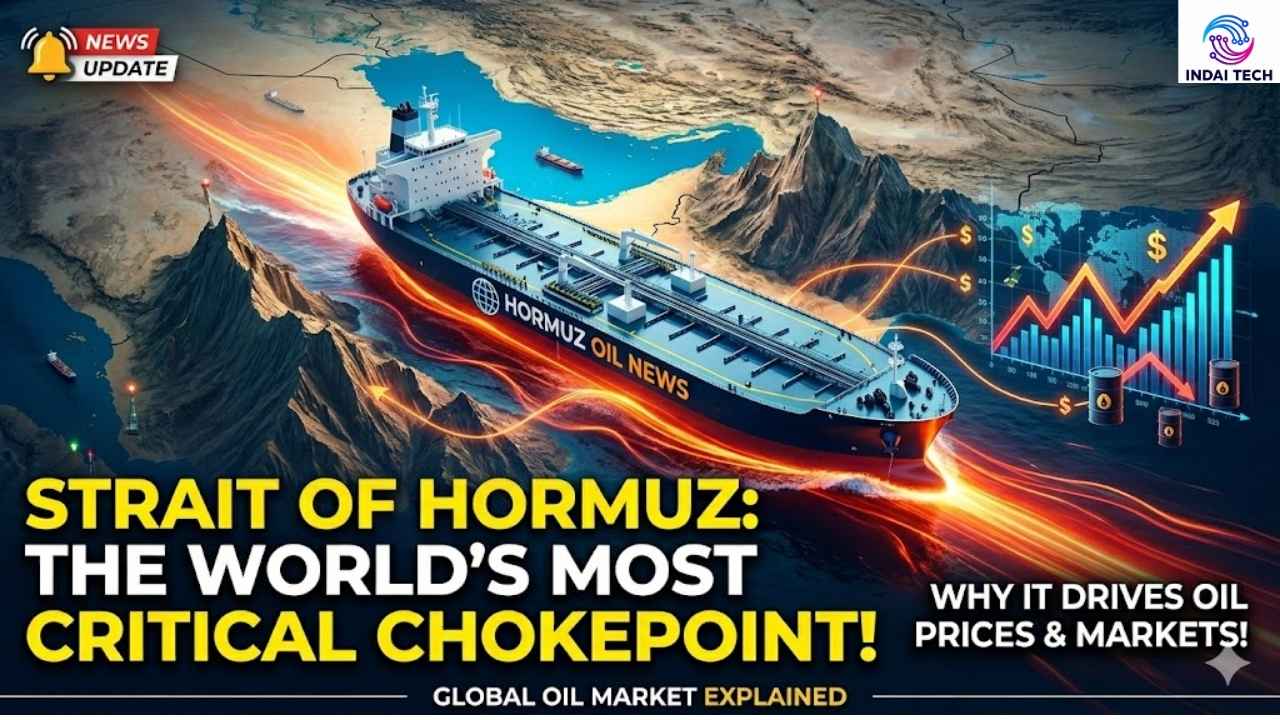
Agar aap crude oil, petrol prices, stock market, shipping, ya global inflation ko follow karte ho, toh Strait of Hormuz Oil News: Why This Critical Passage Matters to Global Markets aaj ke din ka sabse important geopolitical update hai. Yeh chhota sa waterway Middle East ka sirf map par ek narrow line nahi hai — yeh duniya ke energy flow ka pressure valve hai. Is route se global oil ka ek bahut bada hissa guzarta hai, isliye yahan ka har tension, har warning, aur har shipping disruption directly Brent crude, fuel costs, airline stocks, rupee sentiment, aur even inflation expectations ko shake kar sakta hai.
Ab asli sawal yeh hai: Strait of Hormuz itna important kyun hai, markets is par itni closely nazar kyun rakhti hain, aur ordinary consumers ko isse kya impact ho sakta hai? Is article mein aapko simple language mein latest context, market impact, timeline-style summary, expert-style analysis, aur FAQs milenge — taaki aap bina confusion ke samajh sako ki yeh news aapke wallet aur portfolio dono ke liye kyun matter karti hai.
Table of Contents
- What happened?
- Why Strait of Hormuz matters to global markets
- Market impact on oil, stocks, and inflation
- Timeline of key developments
- What happens next?
- Quick comparison table
- FAQs
What happened?
Strait of Hormuz Oil News: Why This Critical Passage Matters to Global Markets is trending because this narrow maritime chokepoint remains one of the most sensitive energy routes in the world. Any escalation in the Gulf region, any threat to shipping lanes, or any hint of disruption instantly raises market anxiety. Even when there is no full blockade, the mere risk of disruption can push traders to price in higher crude premiums.
Recent market chatter has once again turned toward this passage because it sits at the center of global energy security. A lot of traders, shipping companies, and policymakers track the Strait of Hormuz the way cricket fans track a final over — one small move can change the entire outcome. Honestly, that is exactly why this corridor is so feared by markets.
For readers checking this update for investment or daily news reasons, the key takeaway is simple: the Strait of Hormuz is not just a regional issue. It is a global market trigger.
Strait of Hormuz Oil News: Why This Critical Passage Matters to Global Markets
The Strait of Hormuz connects the Persian Gulf to the Arabian Sea and the wider world. Oil and LNG shipments from major producers in the Gulf depend on it. That means any tension around the passage can affect:
- Brent crude prices
- Diesel and petrol expectations
- Airline and shipping stocks
- Inflation outlook in importing countries
- Central bank policy expectations
- Geopolitical risk premiums in global markets
Think of it like this: if the Strait of Hormuz is the main gate for a huge warehouse of energy, then even a rumor of a gate jam can make buyers panic. That panic alone is enough to move prices. This is why traders do not wait for a full crisis. They react to risk signals early.
Another reason this matters is that oil is still a foundational input for transport, logistics, manufacturing, aviation, and even food distribution. So when oil gets expensive, the impact is not limited to energy companies. It spreads across the economy like a ripple.
Market impact: oil, stocks, and inflation pressure
The immediate market reaction to Strait of Hormuz tension usually shows up first in crude oil futures. Brent crude tends to gain a risk premium when shipping worries rise. If the tension persists, import-dependent economies start worrying about higher fuel costs and inflation.
In stock markets, the reaction is usually mixed. Oil & gas producers may benefit from higher prices, while airlines, paint companies, logistics firms, and auto-related sectors can come under pressure. In India, investors often watch the impact on OMCs, aviation names, and broader market sentiment.
There is also a currency angle. For countries that import crude oil, a sustained rise in prices can widen the import bill and put pressure on the current account. That is one reason why global investors keep an eye on the Strait of Hormuz even when they are not directly trading energy contracts.
Mini personal observation: whenever geopolitical risk around oil rises, retail investors usually search the same three things within minutes — Brent crude, petrol prices, and Nifty reaction. That tells you how quickly this story moves from geopolitics to household concern.
Timeline of how the Strait of Hormuz story usually moves markets
| Stage | What markets watch | Typical reaction |
|---|---|---|
| Early tension | Statements, warnings, shipping alerts | Crude futures rise, risk sentiment weakens |
| Escalation phase | Reports of disruptions or threats | Brent premium jumps, airline and transport stocks slip |
| Supply concern | Insurance, freight, rerouting costs | Energy costs rise across markets |
| Policy response | Strategic reserves, diplomatic statements | Volatility may ease if supply fears cool down |
| Stabilization | Shipping normalizes | Crude premium softens, markets recover partially |
This timeline is important because markets do not wait for a full-blown crisis. They trade expectations. That is why even a small update can feel bigger than it looks on paper.
What happens next for global markets?
The next move depends on whether the situation stays rhetorical or turns operational. If shipping remains normal and diplomatic channels stay open, markets may calm down after the initial spike. But if traders sense any real threat to tanker movement, oil can stay elevated for longer.
For India, the indirect impact matters a lot. India imports a large share of its crude needs, so a prolonged rise in oil prices can affect inflation, fiscal math, and company margins. That is why policy makers, refiners, and investors track this passage so closely.
Relatable example: it is a bit like a city’s main water pipeline. Even if your own tap is working today, the moment the pipeline gets blocked, everyone starts hoarding and prices of alternatives rise. Same logic applies here — just with oil.
From a trading angle, the sectors to watch are:
- Oil marketing companies
- Airlines
- Shipping and logistics
- Paints and chemicals
- Auto and tyre-related names
- Broad market volatility indicators
Quick comparison: who gains and who feels pressure?
| Category | Likely Impact if Strait risk rises | Why |
|---|---|---|
| Brent crude | Up | Risk premium increases |
| Airlines | Negative | Fuel costs rise |
| Oil producers | Positive | Higher realized prices |
| Importing economies | Negative | Inflation and trade deficit pressure |
| Defensive sectors | Mixed to positive | Investors rotate to safety |
If you are tracking daily market moves, this is exactly the kind of event that can change sentiment without warning. A single headline can affect not just oil traders, but also equity investors and policy watchers.
Official and trusted reference points
For readers who want to follow primary context and market-sensitive updates, these trusted sources are useful:
For broader market context, you can also check our internal coverage on Brent Crude Price Today, Sensex Crash Today, and Gold Price Today.
FAQs: Strait of Hormuz Oil News
Why is the Strait of Hormuz so important for oil markets?
Because a major share of global oil and LNG shipments passes through this narrow route. Any risk to shipping can quickly affect prices worldwide.
Can Strait of Hormuz tensions increase petrol prices in India?
Yes, if crude prices rise for a sustained period, Indian fuel costs and inflation expectations can come under pressure.
Why do Brent crude prices react so fast to this news?
Because traders add a geopolitical risk premium when supply routes look vulnerable, even before actual disruption happens.
Which sectors are most affected by Strait of Hormuz oil news?
Airlines, logistics, shipping, auto-related companies, and oil marketing companies tend to react quickly.
Is this only a Middle East issue?
No. It is a global issue because energy flows, inflation, trade, and market sentiment across countries can all be affected.
Where can I track related market updates?
You can follow our internal pages on Gold Price Today, Brent Crude Price Today, and Sensex Live Updates.
Final analysis: why this passage still controls global nerves
Strait of Hormuz Oil News: Why This Critical Passage Matters to Global Markets is not just another geopolitical headline. It is a reminder that the global economy still runs on fragile routes, sensitive expectations, and fast-moving sentiment. Even when actual supply is not disrupted, the fear of disruption can move prices, punish certain sectors, and alter inflation expectations.
My honest take? This is one of those stories where the map looks small, but the impact is huge. If tensions rise, the first thing markets do is reprice risk. If tensions cool, relief can come fast too. But until clarity returns, traders, policymakers, and consumers will keep watching this passage like a live wire.
Agar aap market news, crude oil trends, ya inflation impact track kar rahe ho, toh is update ko lightly mat lo. The Strait of Hormuz may be narrow, but its effect on global markets is massive.