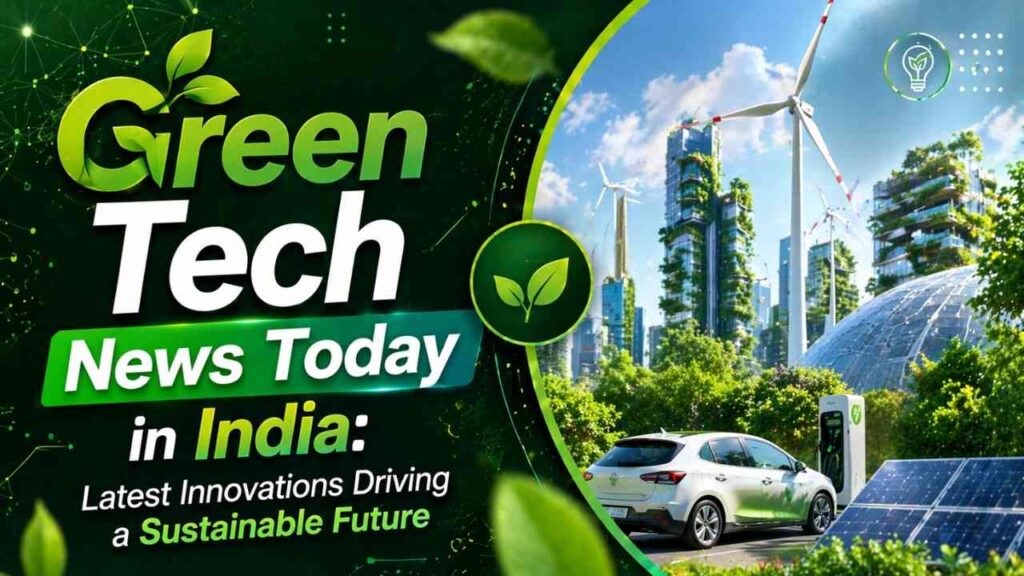
The Future of EV Charging Technology in India is not just about faster charging points. It is about how India will make electric driving easy, affordable, and practical for normal people. Right now, many buyers still worry about range, charging time, and station availability. And honestly, that fear is real. But the good news is, the charging ecosystem is changing fast. From ultra-fast chargers to battery swapping, smart apps, and solar-powered stations, India is slowly building a better EV future. In this article, let’s understand what is happening, why it started, what people are feeling, and what the future may actually look like in simple Hinglish style.
Table of Contents
- The Future of EV Charging Technology in India
- What Exactly Happened
- Why It Started
- Real Situation of People
- Public Reaction / Discussion
- Charging Tech Comparison Table
- FAQ
- Final Honest Opinion
The Future of EV Charging Technology in India
The future looks promising, but not perfect. India is moving from basic slow chargers to a smarter charging network. Earlier, EV charging meant long waiting times and limited stations. Ab ab scene change ho raha hai. New technologies are making charging faster, safer, and more convenient for city users as well as highway travellers.
One big change is ultra-fast charging. These chargers can add a decent amount of range in a short time, which is a big relief for working people. Another change is battery swapping, where you replace an empty battery with a charged one. This is useful for delivery riders, fleet operators, and two-wheeler users.
Also, smart charging is coming into the picture. This means apps, live station updates, auto payment, load management, and even charging during cheap electricity hours. Sounds simple, but this is actually a big deal for India.
If you want to understand the bigger EV ecosystem, you can also read our guide on the EV market in India and EV battery basics for beginners.
What will matter most in the next few years?
- Faster charging speed
- More stations on highways and in housing societies
- Lower charging cost
- Battery swapping for two-wheelers and commercial vehicles
- Solar-powered and green charging hubs
So yes, the future of EV charging technology in India is not only about technology. It is also about trust. If people feel charging is easy, they will buy EVs more confidently.
What Exactly Happened: A Simple Timeline
Let’s keep this simple. First, EVs came in India as a niche idea. Only early adopters were interested. Then government support, rising fuel prices, and better battery tech started pushing the market forward. Slowly, companies began installing public charging stations in metro cities.
After that, more two-wheelers, three-wheelers, and fleet EVs entered the market. This created pressure for better charging infrastructure. And then came the real shift: startups, oil companies, automakers, and charge point operators all entered the race.
Simple timeline of changes
- Early phase: Very few chargers, mostly in big cities
- Growth phase: More EV launches, more public stations
- Current phase: Fast chargers, app-based discovery, battery swapping trials
- Next phase: Highway networks, smart grids, and home-to-public charging integration
According to IEA’s Global EV Outlook 2024, EV adoption is rising globally, and charging infrastructure is one of the biggest factors deciding how fast the shift happens.
Why It Started: Salary, Pressure, Layoffs, Management Issues?
Now, this part needs a little clarity. If we are talking about the charging technology shift, it started because of market pressure, policy support, and user demand. But if we talk about why companies are working so hard on better charging systems, the answer is simple: the EV industry is under pressure to perform.
Companies face many practical issues:
- High setup cost for charging stations
- Slow adoption in some areas
- Power supply and grid limitations
- Customer anxiety about range and waiting time
- Competition from other EV brands and charging networks
Sometimes, management pushes teams to scale fast. Teams may feel salary stress, target pressure, and project deadlines. In some companies, layoffs or restructuring happen when growth does not match expectations. That is the harsh part of any fast-changing industry.
So, the real reason behind the push is not just technology. It is survival. Companies want to stay relevant, and users want convenience. Both sides are pushing each other.
Real Situation of People: Emotional + Practical Angle
Honestly, the average EV user in India is still asking very basic questions. “Charging station milega kya?” “Kitna time lagega?” “Kabhi battery dead ho gayi toh?” These are not silly questions. These are real daily concerns.
When I saw a delivery rider waiting near a charger for almost 40 minutes, it hit me. Technology can look fancy in presentations, but ground reality is different. For many people, time is money. If charging takes too long, the whole EV benefit feels weaker.
At the same time, there is hope. A lot of users are now happy with home charging. Apartment owners are slowly accepting EV-friendly parking rules. Fleet operators are also seeing savings in fuel cost. So the mood is mixed — thoda frustration, thoda excitement.
What people want in real life
- Nearby chargers that actually work
- Fast charging without long queues
- Transparent pricing
- Easy payment through apps
- 24/7 support in case of problems
People don’t want complicated tech language. They just want simple, reliable charging. Bas itna hi.
Public Reaction / Discussion
Public reaction around EV charging in India is mixed, but mostly curious. Some people are very positive and say EVs are the future. Others are still doubtful. They ask, “India mein itna power aur infra hai kya?” Fair question, actually.
On social media, people often discuss battery range, charger failures, and charging queue issues. At the same time, many users also share good experiences with home charging and low running cost. So the discussion is not one-sided.
Some key opinions from the public:
- EV supporters say charging tech is improving fast
- Practical users want more stations outside cities
- Fleet owners want lower downtime
- Apartment residents want better parking and charging rules
For a trusted policy angle, you can also check the NITI Aayog official website and Bureau of Energy Efficiency for energy and EV-related updates.
Charging Tech Comparison Table
| Charging Type | Speed | Best For | Main Benefit | Main Limitation |
|---|---|---|---|---|
| Home AC Charger | Slow to medium | Daily city users | Easy and cheap | Long charging time |
| Public AC Charger | Medium | Office, mall, parking users | Useful during work hours | Not very fast |
| DC Fast Charger | Fast | Long-distance travel | Saves time | Costlier setup |
| Ultra-Fast Charger | Very fast | Highway and fleet users | Quick top-up | Needs strong grid support |
| Battery Swapping | Very quick | Two-wheelers, delivery fleets | No waiting for charge | Standard battery support needed |
Final Honest Opinion
My honest view is this: The Future of EV Charging Technology in India is bright, but it will take time to become smooth for everyone. Big cities may get the best infrastructure first, and smaller towns may wait a bit longer. That is normal in India.
But the direction is correct. Faster chargers, battery swapping, smart apps, and better grid planning will make EV ownership easier. The real win will come when charging feels as normal as refuelling a petrol bike. That day is not far, but it is not here fully yet.
So yes, the future is exciting. But it also needs patience, planning, and honest execution.
FAQ
1. What is the future of EV charging technology in India?
It is moving toward faster chargers, battery swapping, smart charging apps, and more public stations across cities and highways.
2. Will EV charging become faster in India?
Yes, very likely. Ultra-fast DC chargers are growing, and battery swapping is also becoming popular for two-wheelers and fleets.
3. Is home charging enough for most people?
For many city users, yes. If you drive daily but not too far, home charging can be enough and very convenient.
4. Why is public charging still a problem?
Because station availability, grid support, and maintenance are still uneven in many places.
5. Which EV charging technology will grow the most?
Probably fast charging for cars and battery swapping for two-wheelers and commercial vehicles.
6. Is EV charging in India getting cheaper?
In some cases yes, especially with home charging and smart energy use. But public fast charging can still be costly in certain locations.
Conclusion
The Future of EV Charging Technology in India is heading in a better direction, no doubt. The shift is happening because people want speed, convenience, and lower running cost. Companies also know they must improve charging if EV adoption has to grow. Still, the journey is not fully smooth. Some areas will move fast, some will take time. But overall, the change is real, and it is already visible. If India keeps building reliable charging networks, EVs can become a normal part of everyday life, not just a trend.
The above information is based on news reports and online sources. Accuracy is not guaranteed.