If you have ever booked a train ticket and then had to cancel it, you already know the pain. Sometimes plans change suddenly, sometimes the train gets delayed, and sometimes family emergencies happen. In all these cases, one question comes first: Indian Railways Train Ticket Cancellation Charges: A Complete Guide mein exactly kitna cut hoga?
This topic sounds simple, but in real life it gets confusing fast. Normal ticket, tatkal ticket, RAC, waiting list, online refund, counter ticket, chart prepared or not — sabka rule alag hota hai. And honestly, many passengers lose money just because they do not know the exact cancellation rules.
So in this guide, let’s break it down in simple Hinglish + English. No heavy language, no boring theory. Just clear, useful, and practical info that can save your time and money.
Table of Contents
- What is Indian Railways Train Ticket Cancellation Charges: A Complete Guide
- What exactly happened
- Why it started / reason behind it
- Real impact on people
- Cancellation charges by ticket type
- Refund rules and smart tips
- Public reaction and social media buzz
- Comparison table
- FAQ
What is Indian Railways Train Ticket Cancellation Charges: A Complete Guide
In simple words, cancellation charges are the amount Indian Railways deducts from your ticket fare when you cancel a confirmed, RAC, or waiting ticket. The remaining amount is refunded to your account or payment source, depending on how you booked the ticket.
This is part of the official railway refund policy. The exact deduction depends on ticket type, train status, and time of cancellation. For example, if you cancel early, you may lose less money. But if you cancel after chart preparation, the rules become stricter.
If you want to understand train booking better, you can also check our IRCTC ticket booking guide and train chart preparation explained. For travel planning, see our Indian railway travel tips.
What exactly happened
There is no single “one-time event” here. The issue is that many people only notice cancellation charges when they suddenly need a refund. Then they see deductions and feel shocked. Some think the railway is charging too much, while others feel the system is fair because seats are blocked once booking happens.
In the last few years, online booking has made cancellation easier, but also more visible. Earlier, people used to cancel at counters and accept whatever deduction was shown. Now passengers compare rules on IRCTC, social media, and travel forums. So the discussion has become louder.
When I saw this for the first time, honestly thoda surprise hua. I had assumed “cancellation means refund,” but then I realised railway rules are not that simple. You don’t just cancel and get full money back. The timing matters a lot.
Why it started / reason behind it
Why does Indian Railways charge cancellation fees at all? Simple reason: when a seat is booked, that seat is blocked for someone else. If you cancel late, the railway may not be able to resell it easily. That means revenue loss and operational imbalance.
So the cancellation charge works like a fairness system. Early cancellation means lower deduction. Late cancellation means higher deduction. This encourages passengers to plan properly and not hold seats unnecessarily.
Also, for trains with high demand, even one cancelled seat can matter. Imagine a busy route like Delhi to Patna or Mumbai to Goa. Seats vanish quickly. If many people cancel at the last moment, it creates confusion for waitlisted passengers too. So yes, the logic is practical, even if it feels painful sometimes.
Real impact on people
The real impact is very human. A family may cancel because of a medical emergency. A student may miss an exam plan. A worker may get leave rejected. In such cases, cancellation charges feel harsh because the loss comes on top of stress.
For middle-class Indian families, even a small deduction matters. If four tickets are cancelled, the total loss can become noticeable. That is why people often search for “how to avoid cancellation charges” or “how much refund will I get on train ticket cancellation.”
At the same time, some passengers benefit from the system too. When rules are clear, refunds are processed faster and expectations are realistic. So the system is not perfect, but it is at least structured.
Indian Railways Train Ticket Cancellation Charges: A Complete Guide by ticket type
Now let’s come to the most important part. Cancellation charges are not the same for every ticket. Here is the practical breakdown.
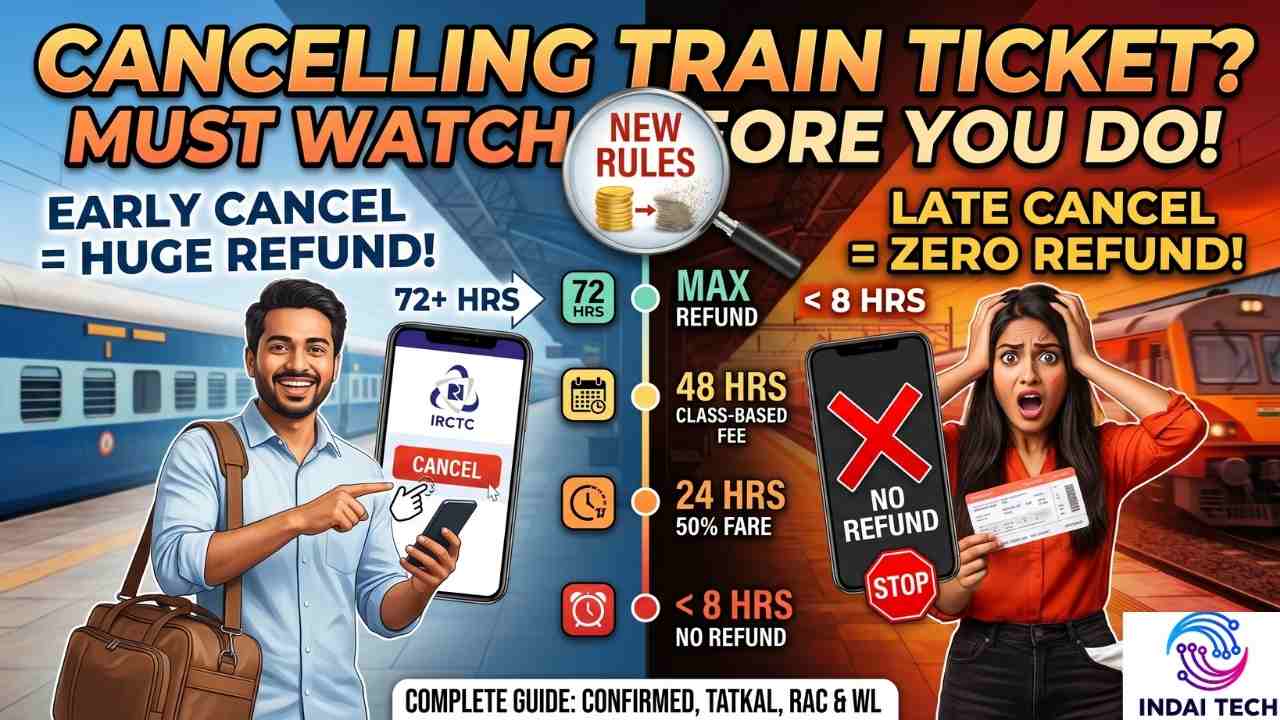
- Confirmed e-ticket: If you cancel before chart preparation, deduction is usually based on class and timing.
- RAC ticket: Cancellation rules are similar, but refund depends on status and timing.
- Waiting list e-ticket: If the ticket remains waitlisted after charting, refund is generally processed automatically.
- Counter ticket: You usually need to cancel at the reservation counter, and refund rules depend on when you cancel.
- Tatkal ticket: This is the strictest category. Usually, no refund is given for confirmed tatkal tickets.
Waise, many people get confused between chart-prepared and chart-not-prepared cancellation. That one timing point can change your refund amount a lot. So always check before you hit cancel.
Refund rules you should know
Refund is not always instant. For online tickets, the amount usually goes back to the same payment method after deduction. For counter tickets, the refund process may take a bit more effort.
Important things to remember:
- Cancel as early as possible.
- Check whether the chart is prepared or not.
- Read the ticket category carefully.
- Tatkal tickets have very limited refund options.
- Waitlisted e-tickets often get auto-refund if not confirmed.
If you are unsure, you can verify details on the official IRCTC website and the Indian Railways portal. Trusted reference links: IRCTC official website and Indian Railways official website.
Public reaction / social media buzz
Public reaction is mixed, and honestly that is expected. On social media, some passengers say cancellation charges are too high, especially for emergency cancellations. Others say the rules are fair because trains are already heavily booked and the system needs discipline.
There are also common complaints like: “Why is refund so slow?” “Why did I lose so much on tatkal?” and “Why is the rule different for every ticket type?” These questions keep coming again and again.
But there is also a positive side. Many travellers now share refund hacks, booking tips, and cancellation screenshots online. This has made passengers more aware. So even if frustration exists, awareness has improved a lot.
Comparison table: cancellation charges and refund behavior
| Ticket Type | Cancellation Timing | Typical Refund Behavior | Passenger Note |
|---|---|---|---|
| Confirmed e-ticket | Before chart preparation | Refund after deduction | Better to cancel early |
| RAC ticket | Before chart preparation | Partial refund after charges | Depends on final status |
| Waiting list e-ticket | After chart preparation | Auto-refund if not confirmed | No manual cancellation needed in many cases |
| Counter ticket | At reservation counter | Refund as per railway rules | Keep original ticket safe |
| Tatkal ticket | Any time after booking | Very limited or no refund | Highest risk of loss |
Smart tips to reduce loss
If you travel by train often, these small tips can save money:
- Book only when your travel plan is fairly sure.
- For uncertain plans, avoid tatkal unless necessary.
- Check refund rules before payment.
- Cancel as soon as your plan changes.
- Keep booking details and transaction ID ready.
One more thing: sometimes people book multiple tickets “just in case.” That sounds safe, but it can backfire. You may end up paying cancellation charges on more than one ticket. So better to book smartly, not emotionally.
Final honest opinion
My honest view on Indian Railways Train Ticket Cancellation Charges: A Complete Guide is this: the system is logical, but not always friendly to passengers. It protects railway operations, yes. But for ordinary people facing sudden emergencies, the deductions can feel heavy.
Still, if you understand the rules properly, you can reduce your loss a lot. Most problems happen because people do not check timing, ticket type, and refund conditions. Once you know these basics, cancellation becomes less scary.
So next time you book a train ticket, just pause for a second and ask yourself: Is this plan really fixed? If not, should I book now or wait? That one small decision can save you money and stress.
Indian Railways Train Ticket Cancellation Charges: A Complete Guide is not just about deductions. It is about planning better, avoiding surprise losses, and travelling with a little more peace of mind.
FAQ
1. Do I get full refund on train ticket cancellation?
No, not usually. Full refund is rare. In most cases, Indian Railways deducts cancellation charges based on ticket type and timing.
2. Is tatkal ticket refundable?
Confirmed tatkal tickets generally do not get refund. That is why tatkal booking should be done only when travel is almost certain.
3. What happens if my waiting list e-ticket is not confirmed?
If it remains waitlisted after chart preparation, it is usually cancelled automatically and refund is processed as per rules.
4. Can I cancel a counter ticket online?
Usually no. Counter tickets generally need to be cancelled through the reservation counter, depending on the ticket and station rules.
5. Where can I check official cancellation rules?
You can check the official IRCTC website and Indian Railways portal for the latest refund and cancellation policy.
Disclaimer: The above information is based on public sources and latest available updates. Please verify official details before cancelling any ticket.
Image alt text suggestion: Indian Railways Train Ticket Cancellation Charges: A Complete Guide showing refund rules, tatkal cancellation, and IRCTC ticket cancellation process.