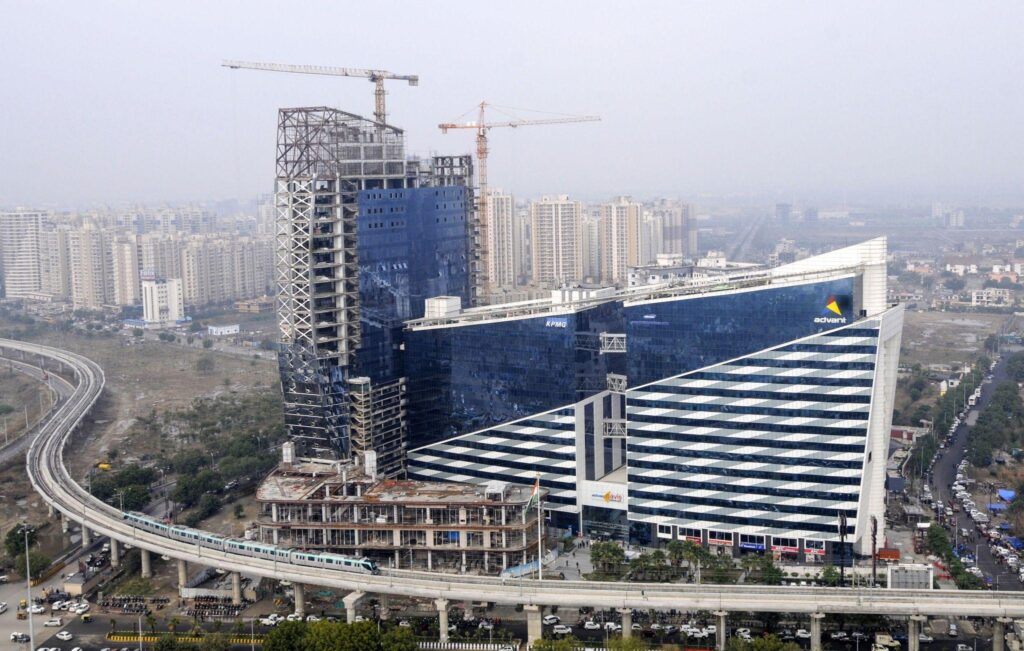
It was an ordinary weekday morning in Noida when hundreds of employees suddenly gathered outside the glass towers of Sector 62. Loud voices replaced keyboard sounds, and placards filled the streets. The Noida Sector 62 protest didn’t just emerge overnight — it had been simmering for months beneath the polished surface of corporate life. I was there that day, watching groups of young professionals shouting slogans, some with tired eyes, others with fierce determination. The air felt heavy, not just from the summer heat, but from years of silent frustration breaking out all at once.
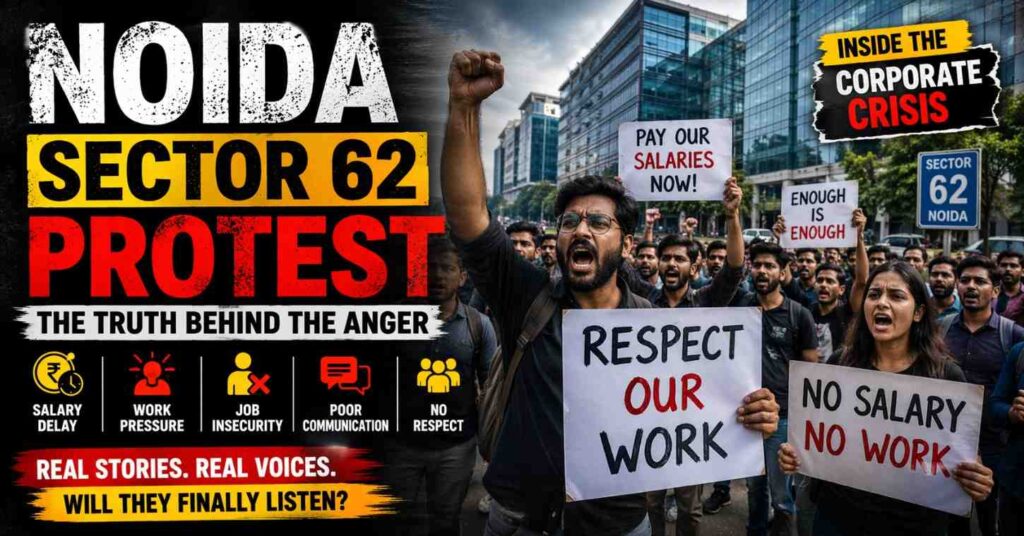
Table of Contents
- Growing Anger: The Truth Behind Noida Sector 62 Protest
- What Sparked the Fire: Inside the Sector 62 Chaos
- Employee Voices: Real Stories from the Protest Site
- Hidden Factors: Why the Noida Sector 62 Protest Began
- Companies React as Noida Sector 62 Protest Intensifies
- Public Reactions & Social Buzz: The Divided Opinion
- FAQs
Growing Anger: The Truth Behind Noida Sector 62 Protest
The Noida Sector 62 protest became one of the most talked-about events in early 2024. What started as a few employees complaining online about delayed salaries soon turned into a full-blown protest involving hundreds from multiple tech and BPO companies. The images of young professionals sitting on the pavement with banners saying “Respect Our Work” spread widely on social media.
For outsiders, it looked like chaos. But for those standing there, it was more like a last attempt to be heard. Employees claimed their HR departments had ignored repeated complaints about pending payments and layoffs. Many said they were stuck working overtime without benefits or clarity on when salaries would resume. That anger just kept building — quietly, but steadily.
When I saw this happening, I honestly felt a mix of sadness and admiration. Sadness because people had reached this stage, and admiration because, despite fear of losing jobs, they decided to stand together. The protests seemed less about politics, and more about simple human dignity — being paid fairly for hard work.
What Sparked the Fire: Inside the Sector 62 Chaos
Let’s talk about how everything unfolded. It started in late February when one IT firm delayed salary payments for the third month in a row. Employees initially thought it was a technical issue. But rumours began circulating that the company was facing cash flow problems and possible layoffs. By mid-March, other firms in the same area followed similar patterns — late payments, unpaid overtime, and contract terminations.
Soon, WhatsApp groups of employees turned into coordination hubs. A small call for a peaceful sit-in outside Gate No. 2 of Sector 62 turned into a massive gathering. Within hours, traffic was blocked, police were deployed, and the media arrived. The Noida Sector 62 protest had officially begun.
The chaos that day wasn’t random. People weren’t just angry — they were exhausted. Some employees had gone months without pay while still being asked to “keep the work spirit alive.” That imbalance, between expectations and empathy, became the real fire.
Employee Voices: Real Stories from the Protest Site
At the protest site, you could hear real stories that hit deep. One young employee, Pallavi, said she hadn’t received her salary in two months and had to skip rent. Another, Arjun, shared that he worked 14-hour shifts during a project deadline, only to be told his position was being “reviewed.” These weren’t stories from faraway industries — these were everyday Indian professionals trying to survive.
As I moved around the crowd, one thing was clear: this wasn’t just about salaries anymore. It was about mental health, respect, and transparency at work. People talked about the stress, long hours, and the way managers often brushed off issues as “just temporary.” It didn’t feel temporary anymore.
You could see frustration in everyone’s eyes. Some feared police action, some were worried about losing jobs forever. Yet, most of them said one thing in common — “At least now they will listen.” That sentence kept echoing in my head.
Hidden Factors: Why the Noida Sector 62 Protest Began
To understand the Noida Sector 62 protest, we have to dig deeper. The loud slogans we saw were only the surface. The real reasons were structural — low salaries, insecure contracts, pressure to meet unrealistic targets, and almost zero communication from management during financial downturns.
Many companies had grown too fast after the pandemic, hiring massively to meet rising project demands. But when global clients started cutting costs, the same companies began trimming salaries or delaying them. There were also reports of toxic management behavior and poor grievance handling. Employees felt trapped — afraid to complain, yet unable to continue.
Here’s a simple table that captures what most employees reported:
| Issue | Description | Impact on Employees | Severity Level |
|---|---|---|---|
| Salary Delay | Monthly payments postponed or partially stopped | Financial stress, rent & loan issues | High |
| Low Salary | Below-market wages, no increments | Low morale, low retention | High |
| Work Pressure | Unrealistic targets, long hours | Burnout, anxiety | Medium |
| Job Insecurity | Frequent layoffs, no notice period | Fear, mental exhaustion | High |
| Poor Communication | Lack of management clarity & HR empathy | Frustration, distrust | High |
When you see all that together, it’s obvious — this wasn’t spontaneous anger. It was built up slowly, month after month, through poor communication and lack of respect.
Companies React as Noida Sector 62 Protest Intensifies
The sudden explosion of the Noida Sector 62 protest forced several companies to finally respond. Some HR departments issued public statements promising to clear pending salaries. Others tried to downplay the situation, calling it “internal confusion.” But the damage was already done — trust had been broken.
A few firms even brought police intervention, which made things worse. Videos surfaced showing employees being pushed off the premises. Social media caught fire with hashtags like #Sector62Protest and #PayTheEmployees. Many companies faced massive PR backlash, with clients asking questions about internal governance.
Interestingly, some companies took it as a wake-up call. A few CEOs met with protest representatives and promised transparent communication going forward. Whether that actually changes anything — only time will tell — but it did start an important conversation about corporate accountability in India’s tech sector.
Public Reactions & Social Buzz: The Divided Opinion
Social media platforms exploded with opinions. Some sided with the employees, saying the Noida Sector 62 protest was justified in a time when corporate exploitation had become normal. Others argued that protests shouldn’t disrupt operations and suggested legal action instead of roadblocks.
People from other tech hubs — Gurugram, Hyderabad, Pune — started sharing their own experiences of similar issues. Suddenly, it felt less like a local event and more like a reflection of a national corporate culture in trouble.
FAQs
Q1. What exactly caused the Noida Sector 62 protest?
The main trigger was delayed salaries and lack of clarity from management in several tech and BPO firms located in Sector 62.
Q2. How long did the protest last?
The core protest lasted around four days, while discussions and negotiations stretched over two weeks.
Q3. Did the government get involved?
Local authorities intervened to maintain order and ensure both parties — employees and companies — held peaceful negotiations.
Q4. Were all companies in Sector 62 part of the protest?
No, only certain tech, consulting, and support firms were directly involved, though the issue resonated across the region.
The Noida Sector 62 protest wasn’t just a random outburst. It was a mirror — showing what happens when hardworking people are ignored for too long. I stood there watching hundreds of young professionals, many just a few years into their careers, risking jobs to demand basic fairness. It made me realize how fragile corporate trust can be. For a broader perspective on workplace rights and employee laws in India, you can refer to Ministry of Labour & Employment.
Maybe this incident will become a turning point for better transparency and communication in India’s work culture. Or maybe, like many things, it’ll fade away in headlines. But the image of those tired faces, shouting not for luxury but for justice, will stay with me for a long time.